



Inside the Portfolios of Mining’s New Decision-Makers
For generations, the value of a mining house was measured by a single, brutal metric, raw tonnage. The industry operated under a predictable blueprint governed by heavy engineering, deep underground extraction, and male-dominated boardrooms. But today, the commercial realities of the resource sector have radically altered. The most critical battles on a mine site are no longer just about moving rock, they are about navigating strict carbon regulations, managing rapid digital automation, and securing the trust of host communities.As international commodity markets increasingly penalise carbon-intensive practices and demand verifiable environmental, social, and governance compliance, the industrial landscape requires a highly specialised caliber of leadership. This shifting corporate imperative was recently brought to the fore by the Minerals Council South Africa during their industry showcase celebrating prominent women in mining. The initiative highlighted a critical industry reality, the modernisation of heavy industry relies on executives who can navigate complex regulatory architectures, lead green capital projects, and future-proof production models against systemic disruption.
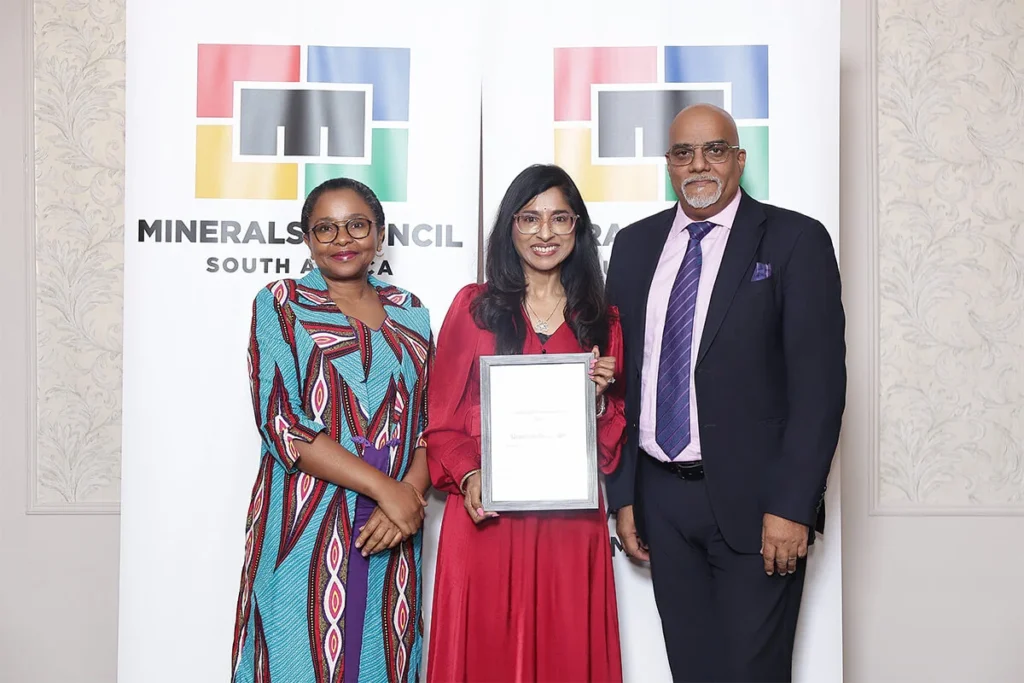
Operating at the absolute vanguard of this ecological transition is Dr. Urishanie Govender, the Chief Sustainability Officer at Harmony Gold Mining Company. Utilising a professional background anchored by a doctorate in business leadership and advanced training in chemistry, Govender directs the interface between heavy resource extraction and sustainable asset management. Within the executive structures of Harmony Gold, her portfolio treats sustainability not as a peripheral public-relations exercise, but as a primary driver of financial durability. By integrating environmental performance directly into capital allocation strategies, her office oversees large-scale renewable energy projects designed to buffer operations against grid instability while simultaneously steering global benchmarks in gold tailings reclamation. As the enterprise positions its portfolio toward copper and other transition metals vital for the global green economy, Govender’s corporate strategy demonstrates that environmental risk management is fundamentally tied to balance-sheet health.
Concurrently, the rapid deployment of automation and real-time analytics across the extraction sector is fundamentally altering the nature of industrial labor. At Impala Platinum, Group Head of Talent and Transformation Carla Radloff spearheads the complex human capital strategies required to navigate this shift. The introduction of mechanized drilling systems and data-driven operational tools means that traditional mining roles are undergoing rapid obsolescence. Radloff’s mandate focuses on systemic workforce evolution, specifically engineered to ensure that technological progress does not result in widespread structural displacement. By constructing advanced mentorship networks, continuous professional development tracks, and targeted technical training frameworks, her office facilitates the migration of operational staff into skilled, technology-driven engineering disciplines. Through this proactive governance, Radloff demonstrates how industrial modernisation can be leveraged to upskill human capital rather than reduce it.
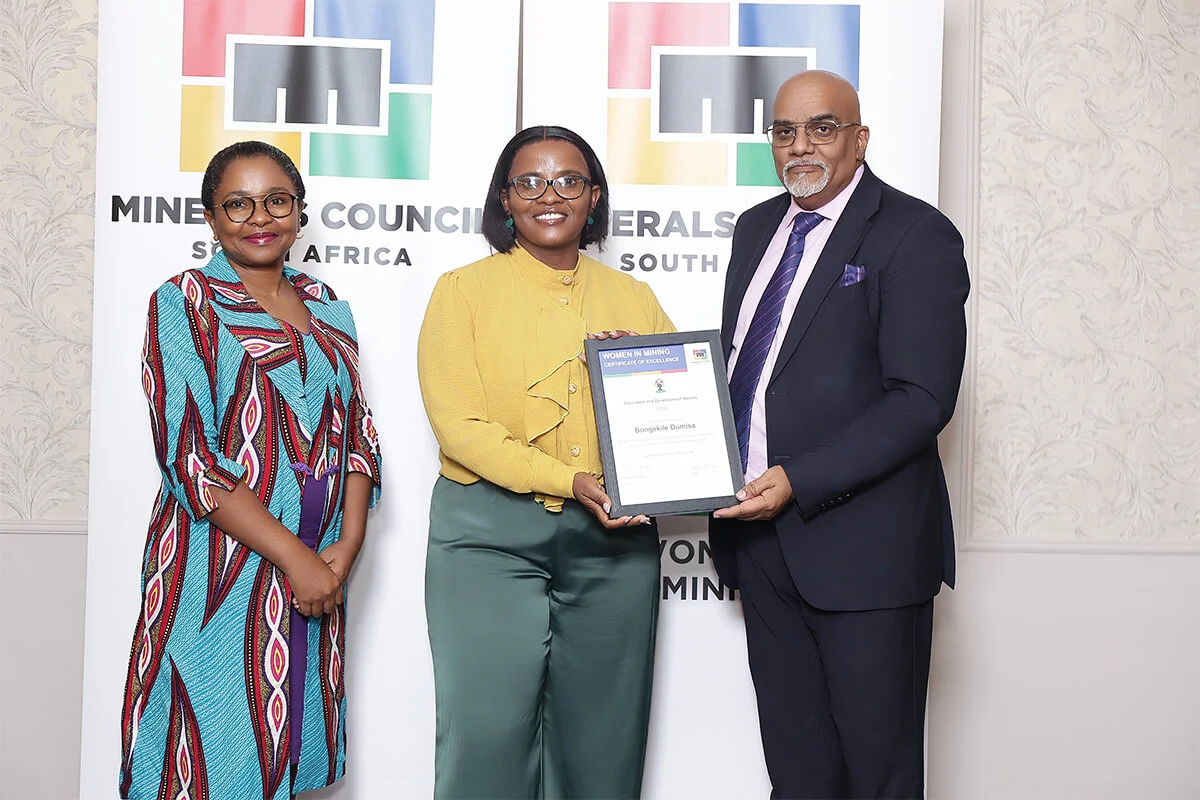
This operational continuity is equally dependent on a mining house’s relationship with its host communities, a dynamic governed by statutory Social and Labour Plans. At the Rossmin limestone operations, Quarry Manager Bongekile Dumisa translates these strict regulatory frameworks into measurable local economic mobility. Bringing the analytical precision of a chemical engineering background to community development, Dumisa oversees the operational alignment between commercial output and regional socioeconomic equity. Her strategy focuses heavily on dismantling entry barriers for women within the technical dimensions of quarry operations. By implementing structured internal platforms for practical skill acquisition and sponsoring regional educational initiatives that incentivize excellence in mathematics and physical sciences, Dumisa is establishing a sustainable local talent pipeline for women in technical fields. Her work underscores the reality that institutional stability and localised equity are inseparable in modern resource governance.
The corporate trajectories of Govender, Radloff, and Dumisa mark a permanent departure from legacy industrial management. Their recognition within broader continental mining forums emphasises an undeniable executive truth, the structural transformation of the extraction sector is no longer an optional corporate social responsibility initiative. It has become a core operational requirement, executed by leaders who wield the precise technical engineering expertise, legal fluency, and commercial acumen necessary to manage the continent’s resource wealth.