






Beyond the Million-Dollar Micro-Loan: The Mechanics of Scaling Africa’s Female Founders
The global narrative surrounding female entrepreneurship in sub-Saharan Africa has leaned heavily on a single, sentimental trope, the resilient grassroots trader. For decades, international development agendas have favoured stories of micro-loans, community sewing circles, and small-scale agricultural cooperatives. While these initiatives provide essential livelihood support, they have unintentionally compartmentalised female-led businesses into the realm of poverty alleviation rather than macroeconomic power.
The data reveals a striking structural paradox. Sub-Saharan Africa boasts the highest rate of female entrepreneurship in the world, with roughly a quarter of all businesses created and managed by women. Yet, these enterprises consistently hit an invisible ceiling. When it comes to growth-stage venture capital, institutional funding, and complex market access, the investment pipeline thins out drastically. Female founders remain over-indexed in survivalist micro-commerce and severely under-represented in the high-stakes world of scale-ups, industrial market share, and corporate boardrooms.
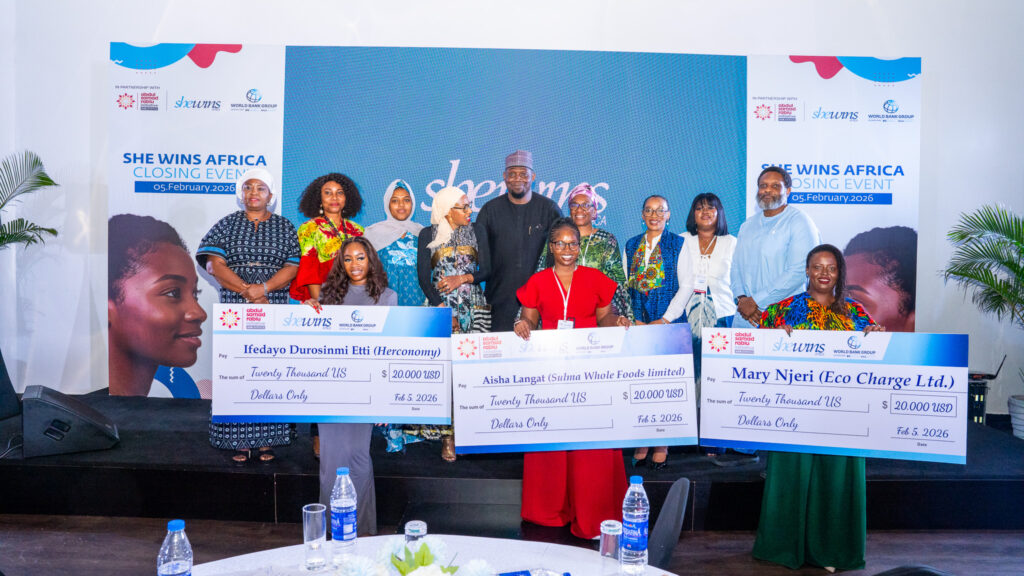
A structural shift is underway to fundamentally rewrite this dynamic. Earlier this year, the International Finance Corporation (IFC) and the Abdul Samad Rabiu Africa Initiative (ASR Africa) announced a massive scale-up of their She Wins Africa program. Moving decisively past its successful pilot phase which supported 100 women across 23 countries, the initiative is expanding its footprint to back 1,000 female entrepreneurs across the continent.
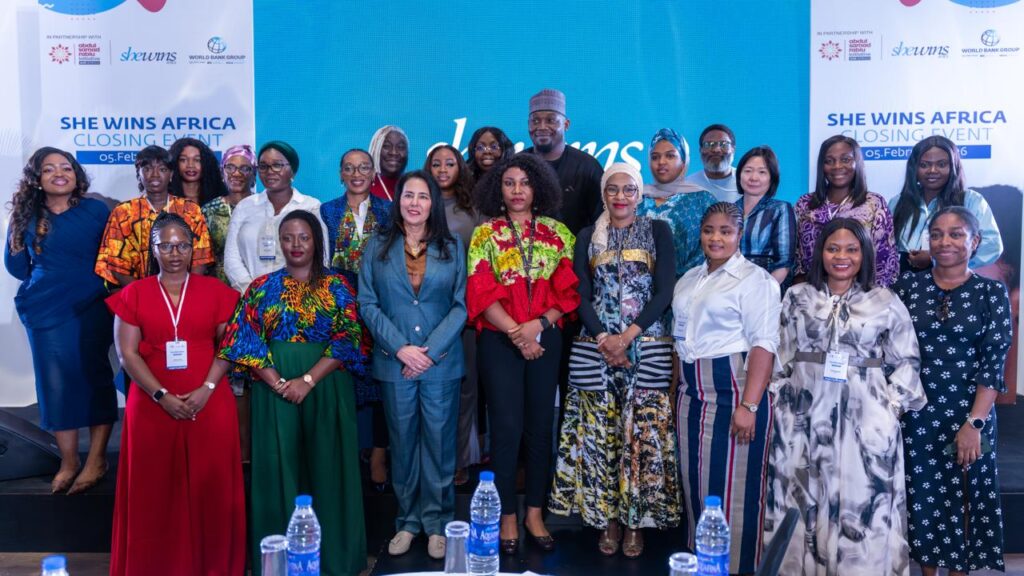
The rationale behind the expansion is grounded in hard financial results rather than corporate philanthropy. The initial pilot cohort collectively mobilized over $4 million in external startup financing, with multiple women-led enterprises successfully unlocking international capital markets. From agro-processors modernizing regional food supplies to financial architects building inclusive banking platforms, these founders proved that the primary barrier to female-led growth is not a lack of viable business models, but a systemic gap in investor readiness and institutional connectivity.
What makes this development significant for the African corporate landscape is how resources are being deployed. Instead of treating female business owners as a monolithic category, this new framework relies on strict commercial segmentation. By categorizing enterprises into early-stage startups, growth-stage entities, and scale-up companies, the initiative offers tailored operational masterclasses, targeted technical assistance, and direct linkages to private equity funds.
Crucially, the strategy centers on the mechanism of catalytic funding. In high-growth ecosystems, private venture capital is notoriously risk-averse, often flowing into established, male-dominated networks. By deploying initial targeted funding, development institutions are effectively de-risking female-led companies. This structural buffering allows private investors to see what standard metrics often miss: robust corporate governance, optimized supply chains, and highly scalable consumer propositions.
When institutional backing transitions from small-scale funding to growth-stage venture capital, it alters the economic trajectory of the entire continent. A business that scales from a local boutique provider to a regional distributor hires more technical staff, invests in digital infrastructure, and actively integrates into cross-border trade networks.
This shift represents the true frontier of economic empowerment. The conversation is no longer about giving women a seat at the table or providing small-scale assistance to keep a business afloat. It is about equipping high-potential female executives with the sophisticated financial engineering, regulatory compliance, and investor linkages required to capture significant market share. As this framework deploys across 1,000 new enterprises, it sets a fresh standard for continental investment: stop treating African female founders as a corporate social responsibility project, and start treating them as a primary driver of institutional growth.