



A Lifetime of Opening Doors: The Legacy of Dr. Phumzile Mlambo-Ngcuka
Welcome to The Lead, an editorial series dedicated to the architects of change and the pioneers redefining the African landscape. In this space, we profile the visionaries whose influence transcends borders, moving beyond traditional leadership to dismantle systemic barriers and build new foundations for the future. We begin with a woman whose trajectory from a rural classroom to the pinnacle of global diplomacy serves as the definitive blueprint for transformative power
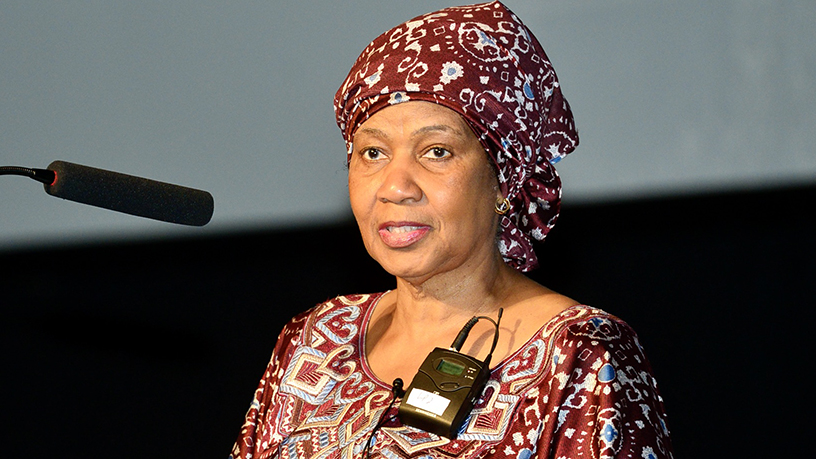
Few figures in modern global history embody the transition from grassroots activism to high-stakes international diplomacy quite like Dr. Phumzile Mlambo-Ngcuka. As a towering architect of gender equality, human rights, and systemic economic reform, her life’s work bridges the gap between South Africa’s liberation struggle and the global fight for the empowerment of women and girls. From the classroom to the halls of parliament, and ultimately to the highest echelons of the United Nations, her trajectory has been defined by a single, unwavering pursuit, removing the structural barriers that keep marginalised communities from thriving.
Born in Claremont, KwaZulu-Natal, Phumzile Mlambo-Ngcuka’s foundation was built on service and social consciousness. Her mother, a community health nurse, provided an early, tangible example of quiet activism, modeling a leadership style dedicated to improving the lives of others. Mlambo-Ngcuka began her academic and professional journey in education, earning a Bachelor’s degree in Social Science and Education from the National University of Lesotho. She started out as a lecturer at the Mpumalanga Teachers Training College and a teacher at Ohlange High School. However, teaching in the fractured landscape of apartheid-era South Africa quickly pulled her into the orbit of political resistance.
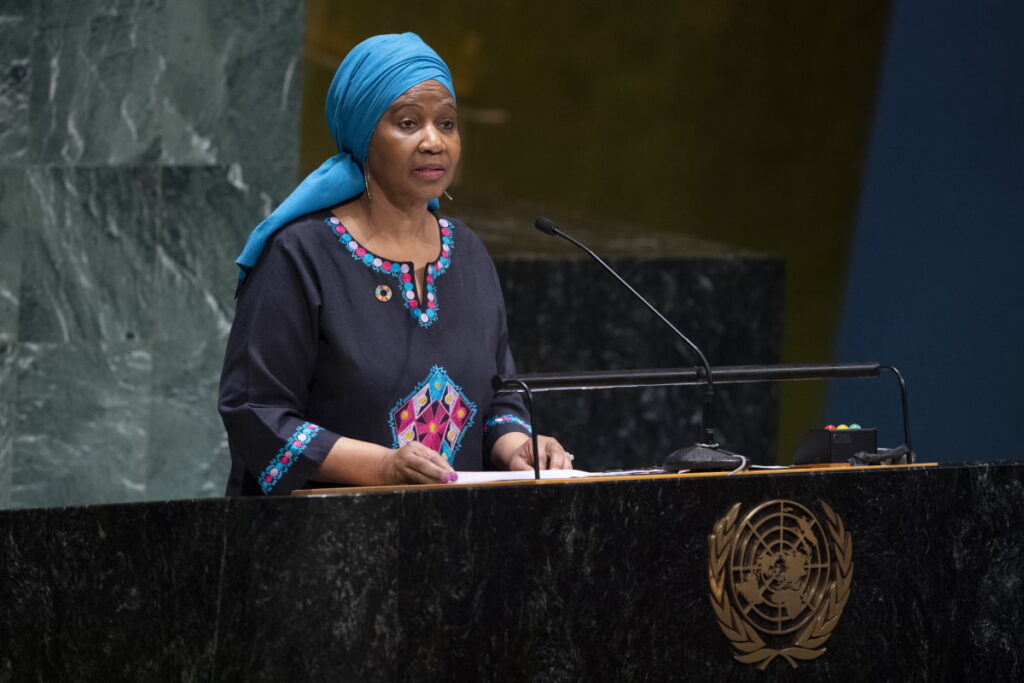
By the early 1980s, she became the first president of the Natal Organisation of Women, a powerful affiliate of the United Democratic Front that galvanised women on the ground against institutional oppression. Recognising that true liberation required global solidarity and a focus on the youth, she moved to Geneva, Switzerland, to serve as the Youth Director for the World Young Women’s Christian Association. There, she pioneered global job creation and education programs for young women across Africa, Asia, and the Middle East. Upon returning to South Africa as the democratic transition began to dawn, she directed her focus toward grassroots economic self-reliance. As director of an ecumenical development organisation and later the World University Service, she worked alongside women in informal settlements, running skills-training initiatives and managing development funds to build sustainable, self-reliant communities.
With the birth of a democratic South Africa, Mlambo-Ngcuka was elected as a Member of Parliament in the country’s first democratic government. Her capacity for administrative leadership and policy design saw her rise rapidly through the ranks of state governance. As Deputy Minister of Trade and Industry, she co-founded the Guguletu Community Development Corporation to drive local economic growth. Later, as the Minister of Minerals and Energy, she radically disrupted a sector historically dominated by an insular corporate structure. She championed the landmark Mining Charter, introducing New Order Mining Rights that ensured meaningful participation and economic equity for black South Africans and local communities.
Her structural focus on the economy reached its apex when President Thabo Mbeki appointed her as the Deputy President of South Africa. She was the first woman to hold the position, making her the highest-ranking female leader in the nation’s history. Far from viewing the position as ceremonial, Mlambo-Ngcuka took the reins of South Africa’s macroeconomic development strategy. She spearheaded the Accelerated and Shared Growth Initiative for South Africa and established the Joint Initiative on Priority Skills Acquisition. Her mandate was explicit, identify and dismantle the binding constraints, such as critical skills shortages and legacy spatial distortions, preventing low-income graduates and women from participating in economic growth.
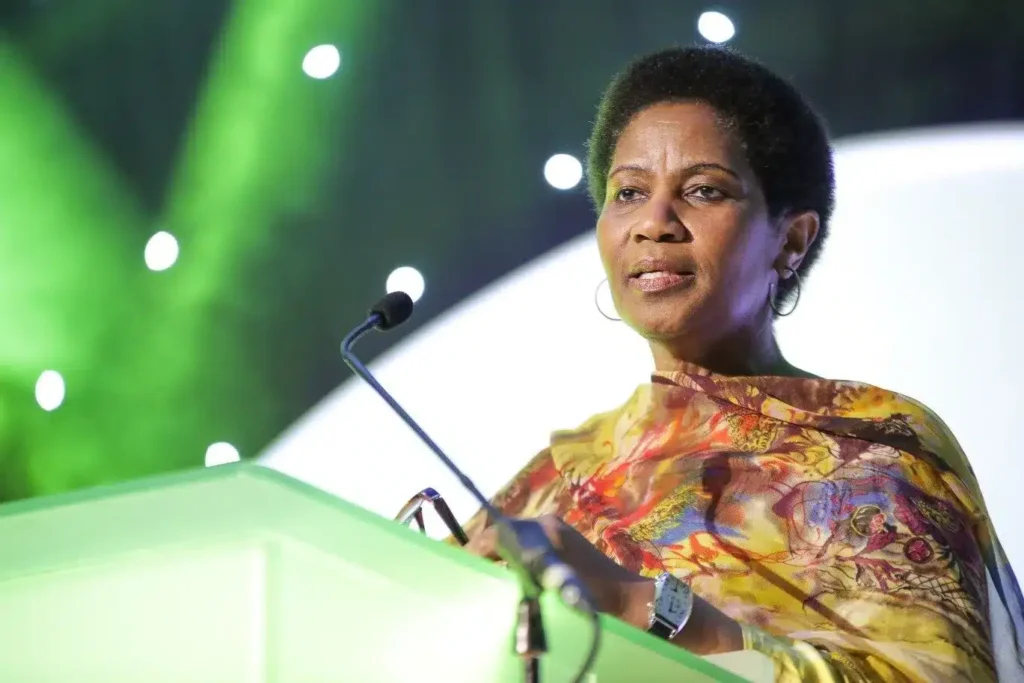
After stepping down from national government, Mlambo-Ngcuka aligned her lifelong commitment to women’s rights with global diplomacy. She was appointed as the United Nations Under-Secretary-General and Executive Director of UN Women, a mandate she held for two consecutive terms. At the United Nations, she shifted the conversation around gender equality from a niche humanitarian issue to a core pillar of global geopolitical stability. Recognising that systemic change requires systemic buy-in, she launched several era-defining global initiatives. She established the HeForShe movement, a solidarity campaign that engaged men and boys as active, accountable stakeholders in the fight for gender equality. She also formed the UnStereotype Alliance to eradicate harmful gender stereotyping across global advertising industries, and led the Generation Equality Forum, which secured forty billion dollars in financial commitments to accelerate women’s rights worldwide.
Throughout her tenure, she leveraged her advanced academic background, having completed a Master’s in Philosophy from the University of Cape Town and a Doctorate in Technology and Education from the University of Warwick to continuously advocate for closing the digital gender divide, ensuring that women and girls are not left behind by technological revolutions.
Today, Dr. Mlambo-Ngcuka remains deeply embedded in institutional leadership and grassroots impact. She serves as the Chancellor of the University of Johannesburg, steering one of South Africa’s premier institutions through the evolution of modern higher education. Concurrently, her active focus remains on the Umlambo Foundation, a non-profit organisation she founded immediately after her tenure as Deputy President. Returning full-circle to her first love of education, the foundation delivers leadership coaching, mentorship, and digital literacy training to school principals in impoverished rural and township communities. Dr. Phumzile Mlambo-Ngcuka’s legacy is not merely defined by the titles she held, but by the structural doors she forced open. Whether rewriting mining legislation in Pretoria, organising financial commitments in New York, or empowering school principals in rural South Africa, her life stands as a seamless blueprint for transformative leadership.